Is saving money on your homeowners insurance worth giving up control over who repairs your property?
When purchasing or renewing homeowners insurance in Florida, you may be offered a discount for participating in a Managed Repair Program or using an insurance company’s preferred contractors.
At first glance, the arrangement may sound convenient. Your insurance company helps coordinate repairs, provides access to its contractor network, and may offer a premium discount or deductible incentive.
But what happens when your home suffers serious water damage, a plumbing failure, or another covered loss? Who decides how much work is necessary? Who selects the contractor? And what happens if you’re unhappy with the repairs?
Before accepting a Managed Repair Program, Florida homeowners should understand both the potential benefits and the risks.
What Is a Managed Repair Program?
A Managed Repair Program (MRP) is an arrangement in which an insurance company uses a network of preferred or approved contractors to perform covered property repairs.
Depending on the insurer and policy endorsement, the program may offer:
- A discount on insurance premiums or certain deductibles.
- Access to contractors selected by the insurance company.
- Assistance coordinating inspections and repairs.
- A workmanship guarantee for qualifying repairs.
- Emergency mitigation services following certain covered losses.
These benefits may sound attractive, particularly when a homeowner is already dealing with the stress of property damage.
However, the terms of the program—and the consequences of declining to participate—can vary significantly from one insurance policy to another.
Some programs allow homeowners to decline the preferred contractor network, potentially subject to reduced coverage or other limitations. Other policies contain separate provisions allowing the insurer to elect to repair covered damage.
Understanding the difference is essential.
Who Is Really Choosing the Contractor?
When you hire your own contractor, you can interview candidates, check references, compare estimates, and evaluate their reputation before allowing them into your home.
Under a Managed Repair Program, the insurance company typically selects or approves the contractors available to perform the work.
This raises an important question:
Does the contractor’s ongoing business relationship with the insurance company create competing financial incentives?
An insurance company understandably wants to control claim costs. Contractors participating in preferred networks may also value the steady flow of referrals.
That doesn’t mean every preferred contractor performs inferior work. Many are experienced, qualified professionals.
Nevertheless, homeowners should consider whether a contractor might face pressure to complete repairs within an insurer-approved budget, even when additional work may be necessary.
The homeowner’s priority should be a complete, safe, properly documented repair—not simply the lowest possible claim expense.
Seven Potential Pitfalls of Managed Repair Programs
1. Limited Control Over Contractor Selection
Your home is one of your most valuable investments. Shouldn’t you have a meaningful say in who enters it and performs the repairs?
Ask whether you can reject a particular contractor, request another vendor, or hire someone independently without affecting your coverage.
2. Questions About Contractor Qualifications and Background Checks
A contractor may be described as approved, preferred, or credentialed. But what exactly does that mean?
Before allowing workers into your property, ask:
- Is the company properly licensed and insured?
- Have the business and individual workers undergone background screening?
- Does the insurer verify subcontractor qualifications?
- Can the contractor provide references from previous customers?
- Who is responsible if a worker damages property or behaves improperly?
Do not assume that being on an insurance company’s preferred list means every employee or subcontractor has undergone a criminal background check.
Ask what screening procedures actually apply.
3. The Risk of Incomplete Repairs or Cutting Corners
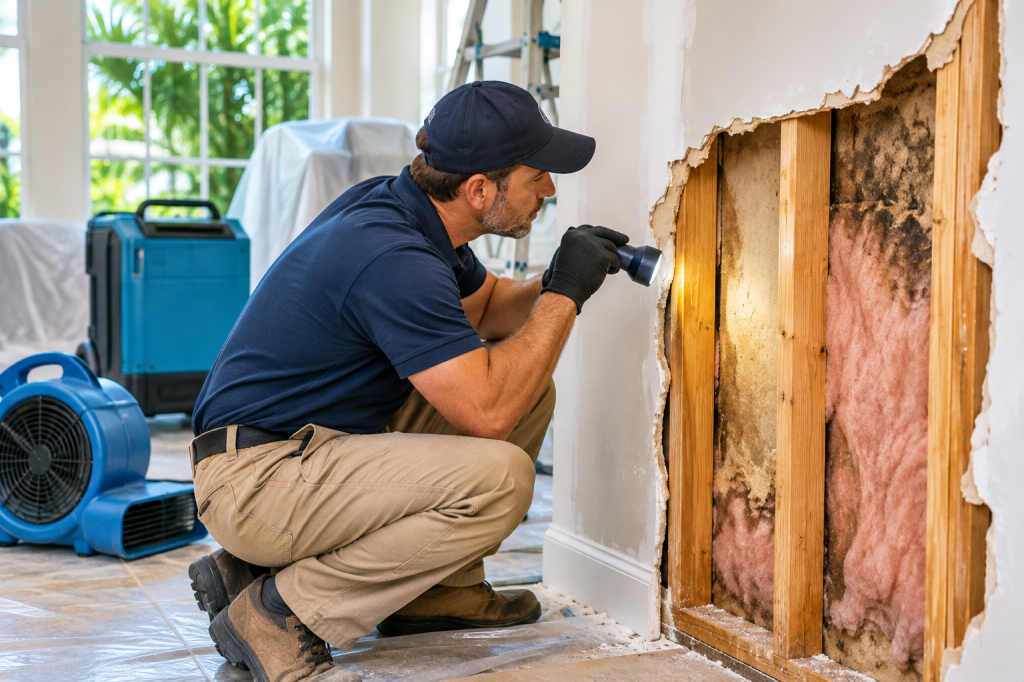
A major concern with any repair project is whether the contractor will identify and correct the full extent of the damage.
For example, a water loss may involve more than replacing visible drywall. Depending on the circumstances, proper restoration could require moisture testing, removal of affected materials, insulation replacement, flooring repairs, and additional investigation of concealed damage.
If a contractor works from an incomplete repair estimate, important items may be overlooked.
Homeowners should insist on a detailed scope of work and a clear process for addressing hidden damage discovered during repairs.
4. Conflicts Over Workmanship and Materials
What if the finished repairs don’t match the quality of your home?
Questions may arise about flooring, cabinetry, paint finishes, replacement materials, and the appearance of repaired areas.
Before work begins, determine who approves materials, how disagreements will be resolved, and whether you can challenge work that fails to meet the agreed specifications.
5. Unclear Responsibility When Something Goes Wrong
Suppose the contractor performs defective work or fails to complete the repairs.
Who is responsible—the contractor, the insurance company, or both?
Some managed repair arrangements provide workmanship guarantees. But homeowners should examine what the guarantee covers, how long it lasts, what exclusions apply, and who will enforce it.
A guarantee is only useful if you understand how to obtain corrective work when problems arise.
6. Restrictions or Financial Consequences for Choosing Your Own Contractor
This is one of the most important provisions to investigate.
Some insurance policies impose special payment limits when homeowners decline the insurer’s managed repair network.
For example, certain Citizens Property Insurance policies with applicable managed repair endorsements have provided a $10,000 limit for additional covered repairs when the homeowner opts out of the contractor network.
That is a potentially significant financial consequence—not simply the loss of a small premium discount.
The actual terms of your policy control, so never assume you can opt out without consequences.
7. Losing Flexibility During an Already Stressful Claim
A property insurance claim can involve unexpected discoveries, additional damage, scheduling conflicts, and disagreements about repair methods.
When the insurance company manages contractor selection and repair procedures, homeowners may have less practical flexibility to make changes.
Before participating, ask how disputes, delays, supplemental repairs, and contractor replacements will be handled.
Is Saving a Few Hundred Dollars Really Worth It?
A premium discount of a few hundred dollars may seem worthwhile when you’re shopping for insurance.
But consider the potential consequences if your home suffers tens of thousands of dollars in damage.
Would you still choose the same arrangement if it meant limiting your contractor options, accepting unfamiliar workers into your home, or facing restrictions when you want to hire someone else?
The answer depends on the actual policy terms, the quality of the contractor network, and the protections available to the homeowner.
The important question isn’t simply how much you can save. It’s what those savings may cost you when you need your insurance coverage most.
Managed Repair vs. the Insurance Company’s Right to Repair
These provisions are related, but they aren’t necessarily the same.
A preferred contractor or managed repair endorsement may offer incentives for using the insurer’s network, while an election-to-repair provision may allow the insurer to choose to repair covered damage rather than issue a conventional cash settlement.
Florida law recognizes insurers’ ability to exercise certain contractual rights to repair property.
Therefore, homeowners should never assume that they have an unrestricted right to select their own contractor or demand a cash payment regardless of policy language.
Review the complete policy, including endorsements, before making decisions.
Seven Questions to Ask Before Agreeing to a Managed Repair Program
- Is participation optional, and what happens if I decline?
- How much money am I actually saving?
- Who selects the contractor, and can I request a replacement?
- What licensing, insurance, reference checks, and background screening are performed?
- Who determines the full scope of repairs and approves additional work?
- Who guarantees the workmanship, and how are disputes resolved?
- Does the policy reduce my available coverage or claim payment if I hire my own contractor?
Get the answers in writing whenever possible.
How Can a Florida Public Adjuster Help?
A licensed public adjuster represents the policyholder’s interests during the property insurance claim process.
At Claims Aid Consultants, we help homeowners and property owners understand claim documentation, evaluate damage, review repair estimates, and identify issues that may affect the proper adjustment of a covered loss.
If your insurance company has offered or invoked a Managed Repair Program, understanding your policy provisions is an important first step.
A public adjuster can help evaluate the insurance claim, although a public adjuster cannot override valid policy terms or guarantee that a homeowner may reject an insurer-selected contractor without consequences.
Frequently Asked Questions About Managed Repair Programs
Can my insurance company make me use its preferred contractor?
Possibly, depending on the policy and applicable endorsements. Some programs are optional but impose financial consequences for declining. Other policies may give insurers contractual repair rights. Review your specific policy before refusing a contractor.
Are insurance company preferred contractors licensed and insured?
Programs may require licensing and insurance, but homeowners should independently verify credentials and ask about subcontractors and workers entering the property.
Does the insurance company guarantee the contractor’s work?
Some programs provide workmanship guarantees. The duration, coverage, exclusions, and procedures vary. Ask for the written guarantee.
Can a preferred contractor overlook hidden damage?
Any contractor can overlook damage or prepare an incomplete repair scope. Homeowners should request thorough inspections and documentation, particularly when water damage may extend into concealed areas.
Can I hire a public adjuster if my policy includes managed repair?
The existence of a managed repair endorsement does not, by itself, mean you cannot seek advice from a licensed public adjuster. However, the policy’s specific repair provisions may affect how the claim is handled.
Is a Managed Repair Program worth the insurance discount?
That depends on the amount saved, the coverage limitations, the contractor network, and the homeowner’s preferences. Compare the financial benefit against the possible loss of flexibility and other contractual consequences.
Protect Your Property Before You Agree
Your home deserves more than a quick repair or an attractive insurance discount.
Before choosing a Managed Repair Program—or agreeing to an insurer-directed repair—understand who controls the work, what happens if something goes wrong, and whether your policy limits your options.
Claims Aid Consultants Public Adjusters serves homeowners and property owners in Port St. Lucie, the Treasure Coast and surrounding areas.
If you’re dealing with a property damage claim and have questions about the insurance company’s repair process, contact Claims Aid Consultants to discuss your situation.
Understand your policy. Know your options. Protect your property.
Disclaimer: This article provides general consumer information, not legal advice. Insurance coverage, contractor selection rights, repair obligations, and payment limitations depend on the policy language, endorsements, applicable law, and facts of the claim.


You must be logged in to post a comment.