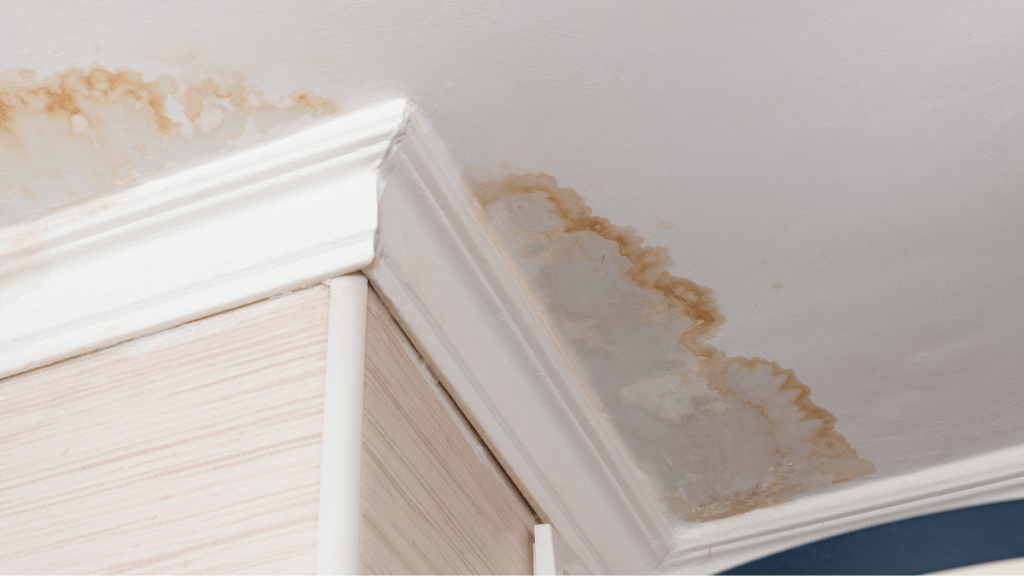
Noticed a brown stain, bubbling paint, or discoloration on your ceiling?
Don’t ignore it.
In Florida—especially during the spring months of March, April, and May—wind-driven rain and storms can cause hidden roof damage that allows water to slowly seep into your home. What starts as a small stain can quickly turn into mold, structural damage, and costly repairs.
Here’s what you need to know.
💧 What Causes Water to Seep Through Your Ceiling?
Ceiling water damage is often a sign of a roof leak, even if the damage isn’t obvious from the outside.
Common causes include:
- Missing or lifted shingles from wind damage
- Cracked or deteriorated roof flashing
- Clogged gutters causing water backup
- Hail damage weakening roofing materials
- Aging roofs with worn sealants
- Improper roof installation or past repairs
In Florida, heavy rains can force water into small openings, making leaks worse over time.
🚨 Warning Signs Inside Your Home
Your ceiling often shows the first signs of a bigger problem.
Watch for:
- Brown or yellow water stains
- Peeling or bubbling paint
- Sagging drywall or soft spots
- Musty odors
- Visible mold or mildew
- Dripping water during or after rain
⚠️ Even if the stain dries up, the problem is not gone—it’s likely getting worse behind the scenes.
🦠 The Hidden Danger: Mold Growth
Moisture trapped in ceilings and insulation creates the perfect environment for mold.
Mold can:
- Spread quickly within 24–48 hours
- Damage drywall, wood, and insulation
- Impact indoor air quality
- Lead to health concerns for your family
The longer you wait, the more extensive (and expensive) the damage becomes.
⛈️ Why This Happens More in Spring (March–May)
Spring storms in Florida bring:
- Heavy, wind-driven rain
- Sudden downpours
- Gusty conditions that loosen roofing materials
This combination allows water to penetrate vulnerable areas of your roof, even if it looks fine from the outside.
🛠️ What to Do If You Notice Ceiling Water Damage
✔️ Act Quickly:
- Take photos of all visible damage
- Place a container under active leaks
- Avoid poking or cutting into the ceiling
- Limit further damage if possible
✔️ Then Take the Next Step:
- Have your roof professionally inspected
- Review your homeowners insurance policy
- Consider getting expert help before filing a claim
📋 Will Insurance Cover a Roof Leak?
In many cases, yes—if the damage is caused by a covered event like wind, hail, or storms.
However, insurance companies may:
- Underestimate the damage
- Deny claims due to “wear and tear”
- Miss hidden moisture or mold issues
That’s why proper documentation is critical.
🤝 Why Work with a Public Adjuster?
If you’re dealing with ceiling stains, water damage, or a suspected roof leak, you don’t have to handle the claim alone.
At Claims Aid Consultants, we help Florida homeowners:
- Identify the true source of the damage
- Document all visible and hidden losses
- Review your policy in detail
- Negotiate the maximum settlement
We work for you—not the insurance company.
No recovery, no fee.
Serving Port St. Lucie and the entire Treasure Coast.


 Claims Aid Consultants Public Adjusters
You must be logged in to post a comment.